
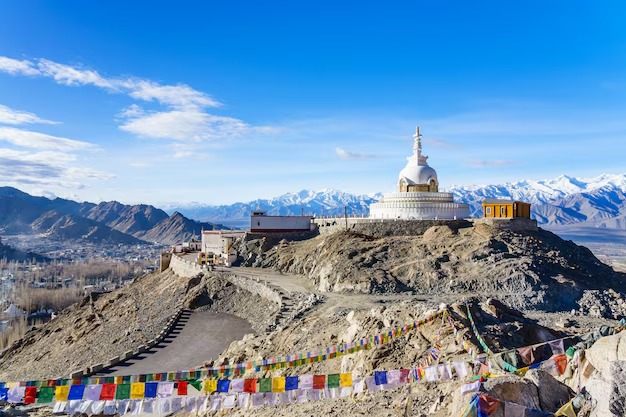
Ladakh
Ladakh is not a place that eases you in gently. The moment your flight descends into Leh, the landscape tells you immediately that...
Get a Free QuoteAbout Ladakh
Ladakh is not a place that eases you in gently. The moment your flight descends into Leh, the landscape tells you immediately that this is unlike anywhere else in India. Brown mountains with no trees. A sky that looks a shade too blue. Air that feels noticeably thin. And all around you, a silence that takes some getting used to. The two districts that make up Ladakh are Leh and Kargil.
From Pangong Lake to the Nubra Valley, every spot has a unique setting. Ladakh also has a distinct Buddhist culture shaped by Tibetan traditions. The festivals, the food, the prayer flags running across mountain passes, the monks in red robes walking through ancient gompas. This is not something that has been designed for tourists, but something that has been a part of daily life here for centuries.
Best time to visit Ladakh
Summer
May to SeptemberThis is the only window when most of Ladakh is accessible by road. The two main highways, the Manali-Leh Highway and the Srinagar-Leh Highway, open once the winter snow melts, typically from late April or May. During this period, you can reach Pangong Lake, Nubra Valley, and Tso Moriri. The Hemis Festival, Ladakh’s biggest and most popular religious celebration, falls in June or July according to the Tibetan calendar. Most travellers plan their trips between June and August.
Autumn
October to NovemberDuring this time, the number of tourists is lower compared to peak season, which leads to a drop in tour package prices. For budget travellers it is the better season to pick. The landscape turns golden shades. The weather is still clear, but temperatures begin to drop sharply at night. If you want to explore Ladakh without the rush, pick this season.
Winter
December to MarchLadakh in winter is a completely different experience. Most road routes are closed under heavy snow. Chadar Trek is the activity that attracts visitors during this period. Here, trekkers walk across the frozen Zanskar River. It is one of the most challenging and dramatic winter treks in India and runs in January and February. Temperatures drop well below minus 20 degrees Celsius in many parts. Only experienced and well-prepared travellers should attempt a winter trip.
Monsoon
July to AugustLadakh lies in a rain shadow zone. Rain does not take place here. July and August bring occasional showers, but not like in the plains of India. Although this period overlaps with peak summer travel, it is generally fine for visiting.
How to reach Ladakh
By air
Kushok Bakula Rimpochee Airport (IXL) is in Leh. It is the only airport in Ladakh. It connects to Delhi, Mumbai, Srinagar, Chandigarh, and Jammu. All connections are domestic. Flying is the fastest and most practical way to reach Ladakh, particularly for those concerned about altitude adjustment, since flying directly to Leh means arriving at 3,524 metres in under two hours from Delhi.
By rail
Ladakh has two main road routes. One is the Manali-Leh Highway and the other is the Srinagar-Leh Highway. The Manali-Leh Highway (NH-3) is approximately 474 km. It is open roughly from May to October. The Srinagar-Leh Highway (NH-1) is approximately 434 km. It generally opens in late April or early May and closes by November. Both routes are high-altitude mountain roads. There are no fuel stations on either stretch, so keep extra fuel with you. Mobile network coverage is also limited.
By road
There is currently no railway line to Ladakh.
Local food to try in Ladakh
Thukpa
The everyday meal of Ladakh. Thukpa is a noodle soup made with wheat flour noodles cooked in a broth with vegetables, and sometimes meat.
Skyu
A slow-cooked stew made from thumb-sized pieces of wheat dough cooked with root vegetables and sometimes meat.
Khambir with Butter Tea
Khambir is Ladakh’s traditional bread, made from whole wheat flour with a slightly dense, slightly sour texture from the fermentation. It is the standard breakfast across Ladakh, eaten warm with butter tea.
Momos
The taste of Momos here is different from the momos of other parts of India. These dumplings have Tibetan roots. They are steamed or fried, and their fillings are made with minced meat or vegetables. They are served with a spicy chutney. They are now available across Ladakh in various forms.
Chhang
It is Ladakh’s traditional drink. A mildly alcoholic beverage brewed from fermented barley. Usually, it is served warm or at room temperature, in a wooden mug. Also, a small piece of butter is placed on the rim as a gesture of respect and hospitality.
Travel tips for Ladakh
- Give your body at least two full days to acclimatise before heading to higher-altitude places.
- Drink water consistently. Dehydration at high altitude worsens symptoms of Acute Mountain Sickness (AMS).
- People with health issues, for example, a history of altitude sickness, should consult their doctor first.
- Prepaid SIM cards from outside Ladakh do not work here. You can buy a local SIM or use BSNL, which works in most parts.
- Drone use is restricted across Ladakh due to its border location. Do not carry or fly a drone without proper authorisation.
- Carry extra fuel. On certain routes or stretches, you will not find petrol stations.
- Respect monasteries and local culture. Do not photograph monks or rituals without permission, and dress modestly inside cultural and religious places.
- Pack layers regardless of the season. Temperatures can shift by 20 degrees between day and night even in summer.
Ladakh tour packages
Custom Ladakh itinerary
Tell us your dates, budget and interests and we will build a plan around you.
Ladakh travel FAQs
Q1. What is Ladakh famous for?
Ladakh is famous for ancient Buddhist monasteries, Pangong Lake, the Nubra Valley with its sand dunes and Bactrian camels, the Chadar Trek on the frozen Zanskar River, Khardung La pass, the Hemis Festival, and some of the most dramatic mountain landscapes in the country.
Q2.Which is the best season to visit Ladakh?
Ladakh works well in every season. June to September is considered the best time for most destinations. July and August are peak months. During this time, tourist numbers increase. October to December is less crowded and offers a quieter experience. January and February are best for the Chadar Trek.
Q3. How do I reach Ladakh?
Coming to Ladakh by flight is the most suitable option. If you want to reach here by road, then the Manali-Leh Highway or the Srinagar-Leh Highway is the perfect choice. Both are open from approximately May to October.
Q4. How many days are needed to see Ladakh properly?
In 7 days, one can cover Leh, Nubra Valley, and Pangong Lake with time factored in for acclimatisation. For visiting Zanskar Valley or Tso Moriri, try to plan 10 to 12 days. If you want to explore a full Ladakh circuit with multiple remote areas, you need to have 14 days or more.
Q5. Can I drive to Ladakh on a motorcycle?
Yes. The Manali-Leh Highway is one of the most popular motorcycle routes in India. Many riders across the country come here to enjoy the driving in summer. It attracts riders from across the country every summer. Just keep in mind, the road passes through very high altitudes and stretches with no fuel or mobile network. Also, check highway opening dates before you leave.
Q6. What are the ATM and cash facilities like in Ladakh?
ATMs are available in Leh but are unreliable. Sometimes they are out of cash during peak season. Remote areas and villages do not have ATMs. Carry enough cash in Ladakh.
Q7. Is Ladakh a good destination for a honeymoon?
Yes, for couples who prefer open landscapes and adventure over beach resorts. Glamping camps by Pangong Lake, a night under the stars in Nubra, and the sheer scale of the mountains around you make it a genuinely memorable experience.
More Destinations to Explore
Keep planning your India trip
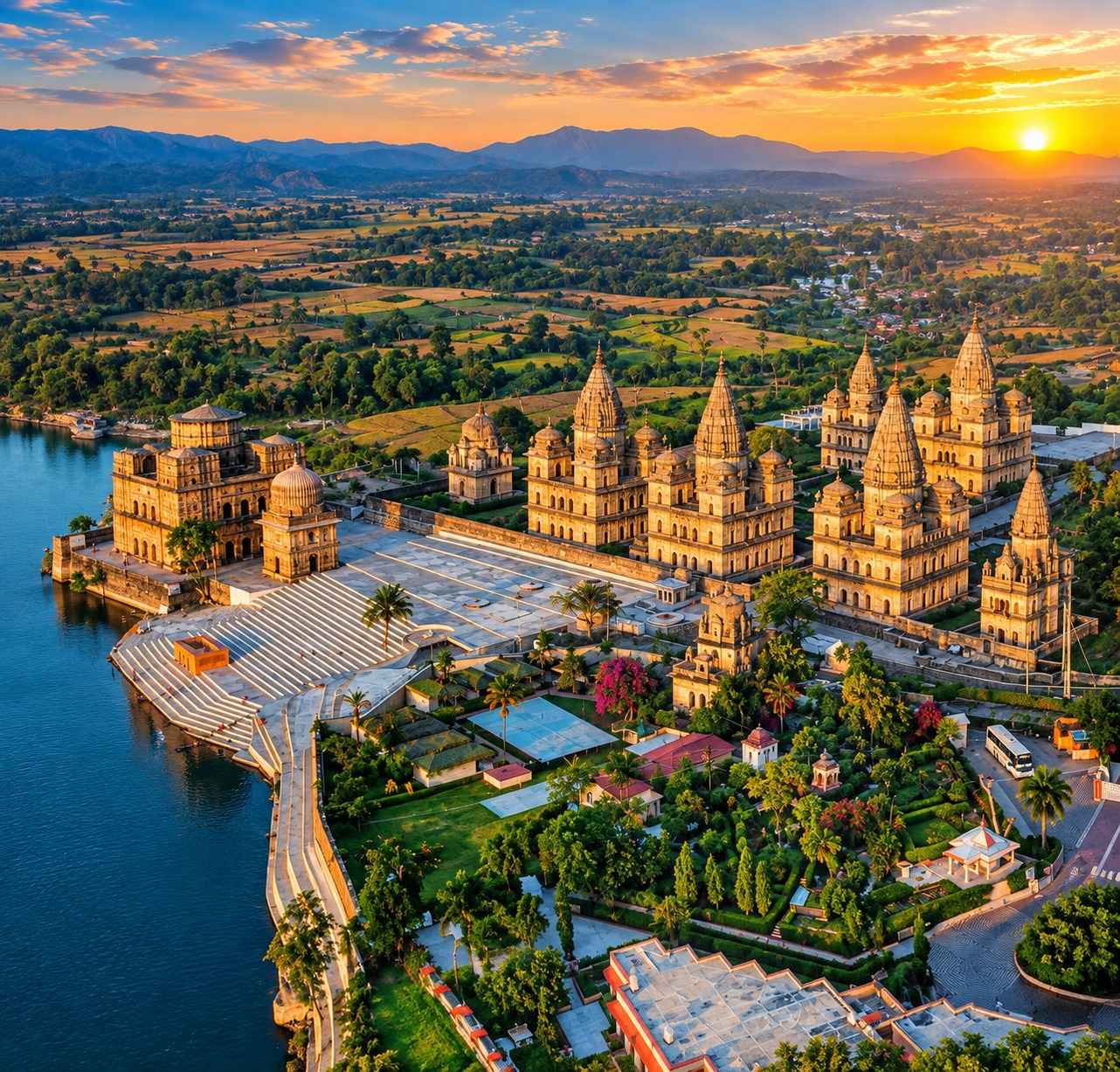
Madhya Pradesh
Madhya Pradesh, often called the “Heart of India”, is a land of heritage, wildlife, spirit...
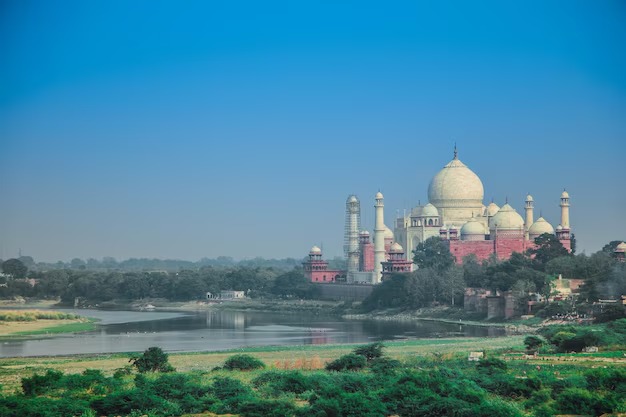
Uttar Pradesh
Uttar Pradesh, located in northern India, is a land where history, spirituality, and cultu...
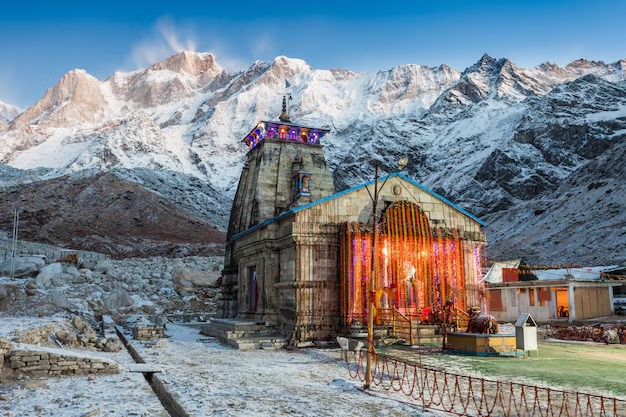 5 packages
Uttarakhand
Uttarakhand, which is also known as Devbhoomi (the Land of the Gods), is a blend of nature...
 2 packages
Kerala
Kerala is a beautiful state; it is very hard to describe its beauty in words. It is locate...
Get a Free Quote
Thank you! Your enquiry is received.
Our travel expert will contact you shortly.